Personal Finance Tips for Beginners: A Simple Guide to Managing Your Money

If you are new to personal finance, you do not need a complicated investment strategy or a large income to get started. The best personal finance tips for beginners are simple: understand your income, control your spending, build savings, manage debt, and create a plan for the future.
Personal finance is essentially the process of managing your money and making decisions that support your current needs and future goals. That includes budgeting, saving, investing, debt management, insurance and retirement planning.
The important part is not doing everything perfectly from day one. It is building a system you can follow consistently.
Personal Finance Tips for Beginners: Quick Overview
| Financial area | What a beginner should focus on |
|---|---|
| Income | Know exactly how much you take home |
| Spending | Track where your money goes |
| Budgeting | Give every major expense a purpose |
| Saving | Build a cash reserve for emergencies |
| Debt | Prioritize expensive debt |
| Investing | Start with goals, risk and time horizon |
| Protection | Consider appropriate insurance |
| Retirement | Start planning early |
| Wealth building | Increase savings, investments and income over time |
A strong financial plan connects these areas instead of treating them as separate problems.
1. Know Where Your Money Goes
The first step in managing money is knowing what comes in and what goes out.
Start by writing down your monthly take-home income. Then list fixed expenses such as rent, utilities, loan payments and insurance. Add variable expenses such as groceries, transportation, entertainment and shopping.
Tracking your spending for 30 days can give you a much clearer picture of your financial habits. Mintos also recommends tracking spending and creating a budget that can change as your circumstances change.
You may discover that the problem is not one large purchase. It could be several small recurring expenses that quietly consume your income.
Useful internal link: [how to track your monthly expenses]
2. Create a Budget You Can Actually Follow
A budget is not supposed to make your life miserable. It is a plan for deciding where your money should go before you spend it.
One popular starting point is the 50/30/20 rule:
- 50% for needs
- 30% for wants
- 20% for savings and debt repayment
This is a framework, not a law. Your housing costs, income, family situation and financial goals may require different percentages. Mintos also presents the 50/30/20 method alongside zero-based budgeting and the envelope method as possible approaches.
If 20% savings is unrealistic right now, start with a smaller amount. A budget that you can maintain is more useful than an ideal budget you abandon after two weeks.
Useful internal link: [50/30/20 budget rule explained]
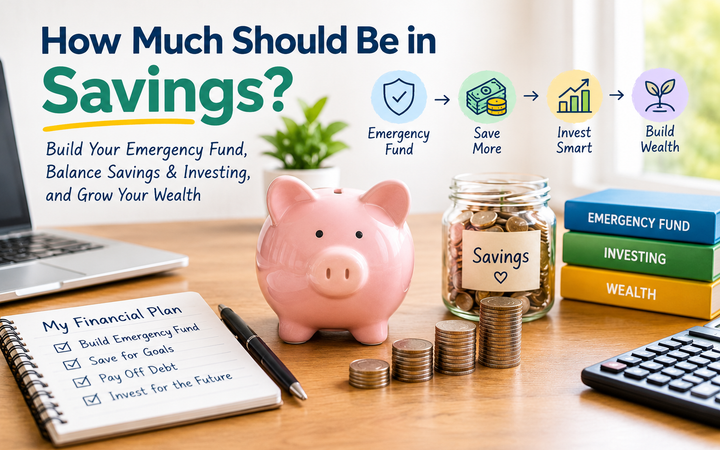
3. Build an Emergency Fund
An emergency fund is money kept aside for unexpected expenses such as a major repair, medical bill or temporary loss of income.
It serves a different purpose from money invested for long-term growth. You generally want emergency money to remain accessible rather than depending on an investment that could fall in value when you need it.
A practical approach is to start small. Build your first cash buffer, then gradually increase it as your income and financial stability improve.
Mintos identifies an emergency fund as an important part of financial protection and personal financial planning.
Useful internal link: [how much should you keep in an emergency fund]
4. Pay Attention to High-Interest Debt
Debt can make it much harder to build wealth because interest charges consume money that could otherwise go toward savings or investments.
Start by listing each debt, including:
- Current balance
- Interest rate
- Minimum payment
- Due date
Two common repayment strategies are the debt avalanche and debt snowball.
With the avalanche method, you generally focus extra payments on the debt with the highest interest rate first. With the snowball method, you start with the smallest balance to create quick psychological wins.
Alpha Academy discusses both approaches and recommends listing debts, automating minimum payments and directing extra cash toward one target debt at a time.
The best method is often the one you can consistently follow.
5. Make Saving Automatic
One of the easiest personal finance tips for beginners is to stop relying entirely on willpower.
Instead of waiting until the end of the month to see what is left, set up an automatic transfer to savings after you receive your income.
You can create separate goals for:
- Emergency savings
- Short-term purchases
- Annual expenses
- Long-term goals
- Retirement
Automation turns saving from a decision you have to make every month into part of your normal financial routine. Both Alpha Academy and Mintos emphasize regular or automated saving as a useful habit.
6. Separate Saving From Investing
Saving and investing are related, but they serve different purposes.
Saving is generally about protecting money for near-term needs and emergencies. Investing is about putting money into assets that have the potential to grow or generate income over a longer period.
Investments can include stocks, bonds, ETFs and other assets. They also carry risk, so the right investment depends on your goals, time horizon and ability to tolerate losses. Mintos similarly distinguishes saving for security from investing for long-term growth.
A beginner should not feel pressured to invest money that may be needed for an immediate expense.
Useful internal link: [saving vs investing: what should you do first?]
7. Start Learning About Investing
You do not need to become an expert before learning the basics.
Begin with four concepts:
- Risk
- Return
- Time horizon
- Diversification
Diversification means spreading investments rather than relying heavily on a single asset. Mintos highlights diversification and matching investments to your timeline and goals as important considerations for new investors.
For many beginners, the goal should be understanding what they own and why they own it—not chasing whatever investment is currently getting attention online.
Useful internal link: [investing for beginners]
8. Set Specific Financial Goals
“Save more money” is a vague goal.
Instead, make the goal measurable:
- Save $1,000 for emergencies.
- Pay off a specific credit card.
- Save $5,000 for a planned purchase.
- Invest a fixed amount each month.
- Increase your savings rate over the next year.
Your goals should also have a time frame.
Personal finance works better when your daily money decisions are connected to something specific you want to achieve. Investopedia describes personal finance as managing current and future financial situations while setting financial goals.
9. Protect Yourself From Financial Emergencies
Saving and investing are only part of financial planning. Protection matters too.
Depending on your circumstances, this can include appropriate health, auto, life, disability or property insurance.
You should also protect your financial accounts. Use strong passwords, enable two-factor authentication where available, monitor transactions and be cautious about unexpected requests for money or account information.
Mintos includes insurance and fraud protection among the broader financial-protection side of personal finance.
10. Work on Increasing Your Income
Cutting unnecessary expenses can help, but there is a limit to how much you can reduce spending.
Income has no fixed ceiling in the same way that a monthly expense category does. Developing valuable skills, negotiating compensation, changing roles or building a legitimate side income can create additional room in your financial plan.
The goal is not simply to earn more and spend more. Ideally, additional income gives you more capacity to save, invest, repay debt and reach financial goals.
Alpha Academy also places emphasis on developing income-resilient skills and potential additional income streams as part of its personal-finance framework.
11. Check Your Net Worth
Your income tells you what you earn. Your net worth tells you what you own after subtracting what you owe.
The basic calculation is:
Net worth = Assets − Liabilities
Assets may include cash, investments, retirement accounts and other valuable property. Liabilities can include credit card balances, student loans, auto loans and mortgages.
Tracking net worth over time can show whether your overall financial position is improving, even when your income changes.
Useful internal link: [how to calculate your net worth]
12. Start Planning for Retirement Early
Retirement can seem far away when you are young, but starting early gives your savings more time to potentially grow.
Retirement planning should consider your expected lifestyle, savings rate, investments, income and desired retirement age.
You do not need to know the exact number on day one. Start by establishing a retirement contribution habit and increase it when your income allows.
Retirement planning is one of the major areas included within personal finance alongside budgeting, saving, investing and debt management.
Useful internal link: [retirement savings by age]
A Simple Beginner Personal Finance Plan
If all of this feels like too much, start with a simple sequence.
Month 1: Understand
Track your income and spending. List your debts, savings and major financial obligations.
Month 2: Stabilize
Create a realistic budget, reduce unnecessary expenses and begin building an emergency fund.
Month 3: Improve
Automate savings, create specific financial goals and develop a debt repayment strategy.
After That: Grow
Once your basic financial foundation is stronger, learn about investing, retirement planning and ways to increase your income.
This gradual approach is more sustainable than trying to change every financial habit overnight.
Common Personal Finance Mistakes Beginners Should Avoid
Ignoring small expenses
Small recurring expenses can become significant when repeated every month.
Using credit without a repayment plan
Credit can be useful, but carrying expensive debt can work against your financial goals.
Investing before building a basic safety net
Long-term investments are not a replacement for accessible emergency savings.
Chasing quick returns
Investments involve risk. Promises of easy or guaranteed high returns deserve careful scrutiny.
Increasing spending every time income rises
A higher income can improve your financial position, but only if some of the additional money is directed toward savings, debt repayment or investments.
Comparing your finances with someone else’s
Someone else’s income, debt, family situation and assets may be completely different from yours. Focus on your own progress.
Personal Finance for Beginners: The Bottom Line
The most important personal finance tips for beginners are not complicated. Track your money, build a realistic budget, establish emergency savings, manage expensive debt, invest according to your goals and keep improving your earning power.
You do not need to become financially perfect. You need a system that helps you make better decisions repeatedly.
Start with one change this week. Track your spending, automate a small savings transfer or make a plan for one debt. Small financial decisions become much more meaningful when you repeat them consistently.
FAQs
What is personal finance?
Personal finance is the management of your income, spending, saving, investing, debt, financial protection and long-term goals.
What should a beginner do first with their money?
Start by understanding your income and expenses. Tracking your spending gives you the information needed to create a realistic budget.
What is the 50/30/20 rule?
The 50/30/20 rule is a budgeting framework that allocates roughly 50% of income to needs, 30% to wants and 20% to savings and debt. It is a guideline rather than a requirement.
How much should a beginner save?
There is no universal amount that works for everyone. Start with an amount you can consistently afford, then increase your savings as your income and expenses allow.
Should I save money or pay off debt first?
It depends on the type of debt and your financial situation. High-interest debt can be expensive, while a basic emergency fund can protect you from having to borrow when an unexpected expense occurs.
When should beginners start investing?
A beginner can start learning about investing at any time. Before investing money needed for immediate expenses, establish a basic financial foundation and understand the risks involved.
What is an emergency fund?
An emergency fund is accessible money reserved for unexpected financial needs, such as a major repair, medical expense or temporary loss of income.
How can I build wealth on a modest income?
Focus on controlling expenses, building savings, managing high-interest debt, increasing your income and investing consistently when appropriate. Wealth building is usually a long-term process rather than a quick result.