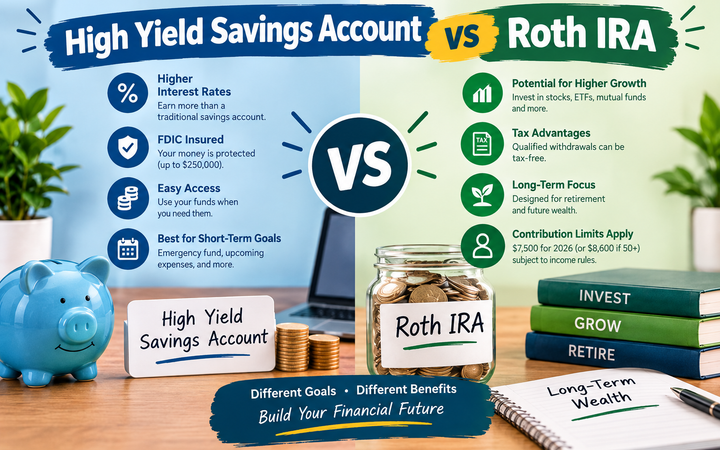
Roth IRA for Minor: 9 Powerful Rules Parents Should Know
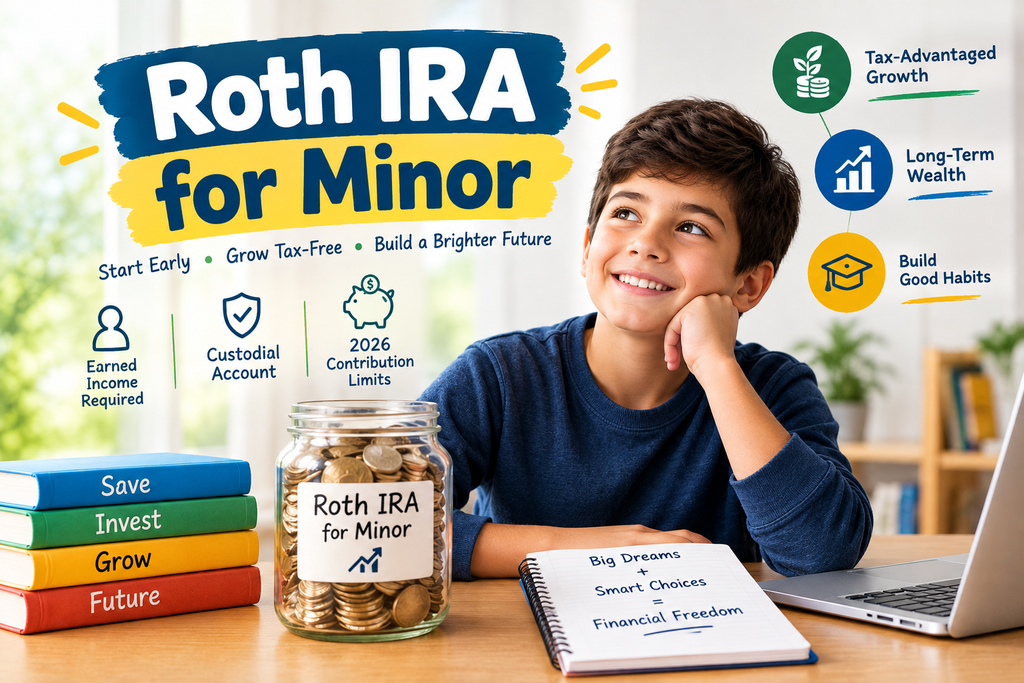
A Roth IRA for a minor is a custodial Roth IRA opened for a child who has earned income. The account belongs to the child, while a parent or another eligible adult serves as custodian and manages the account until the child reaches the applicable age of majority.
The most important rule is simple: a child generally needs taxable compensation from work to contribute to an IRA. For 2026, the overall IRA contribution limit is $7,500, but a child’s actual contribution cannot exceed their eligible compensation for the year if that compensation is lower.
For parents, grandparents, and guardians, this can create an unusual opportunity. A child who starts investing early may have decades for contributions and investment earnings to potentially compound.
However, a custodial Roth IRA is not simply a savings account for children. It has specific eligibility, contribution, investment, withdrawal, and custodial rules that families should understand before opening one.
This guide explains Roth IRA for minor rules in plain English, including how earned income works, who can contribute, how much a child can contribute in 2026, what happens when the child becomes an adult, and how the account can fit into a long-term investing strategy.
Roth IRA for Minor: Quick Facts
| Feature | Rule |
|---|---|
| Account type | Custodial Roth IRA |
| Account owner | The minor |
| Who manages it initially? | Parent, guardian, or other eligible custodian |
| Minimum age | No general minimum age if the child has qualifying earned income |
| Earned income required? | Yes |
| 2026 general IRA limit | $7,500 |
| Child’s contribution limit | Lesser of applicable IRA limit or eligible compensation |
| Contributions | Made with after-tax money |
| Qualified Roth distributions | Generally tax-free |
| Investment growth | Potentially tax-free when distributed through qualified Roth rules |
| Investment risk | Yes; investments can lose value |
| Control after adulthood | Transfers to the child under applicable custodial rules |
The IRS does not establish a special lower IRA contribution limit simply because someone is a minor. Instead, the standard IRA limit applies, while the child’s compensation can create a lower personal limit.
For example, if a teenager earns $3,000 during 2026, the teenager generally cannot contribute more than $3,000 to an IRA for that year, even though the general IRA limit is $7,500.
What Is a Roth IRA for a Minor?
A Roth IRA for a minor is generally a custodial Roth IRA established for a child who has earned income.
The important distinction is that the account belongs to the child. The adult is acting as custodian and manages the account while the child is a minor. Vanguard and Fidelity both describe custodial Roth IRAs as retirement accounts for minors with earned income that are managed by an adult custodian until the child reaches the applicable age of majority.
The child can potentially invest the money inside the Roth IRA in investments offered by the financial institution.
Depending on the provider, available investments may include:
- Mutual funds
- ETFs
- Stocks
- Other eligible investments
The Roth IRA itself is the account structure. It is not the investment.
This distinction matters.
Opening a Roth IRA does not automatically mean the money will grow. The contributions generally need to be invested according to the account’s available investment choices.
Can a Minor Have a Roth IRA?
Yes. A minor can have a Roth IRA if the child has qualifying earned income.
There is no general IRS rule saying a person must be 18 before they can have an IRA. The key issue is whether the child has eligible compensation and meets the applicable Roth IRA requirements.
Vanguard states that a minor with earned income can own and contribute to an IRA, with an adult serving as custodian until the child reaches the relevant age of majority.
That means a child could potentially qualify from a relatively young age if the child genuinely earns compensation.
Examples can include income from:
- A part-time job
- Babysitting
- Lawn care
- Lifeguarding
- Other legitimate work
- Self-employment activities
The IRS defines IRA compensation to include items such as wages, salaries, commissions, and self-employment income.
The important word is earned.
A child does not qualify simply because they have money.
What Counts as Earned Income for a Roth IRA?
Earned income is one of the most important parts of the Roth IRA for minor rules.
The IRS identifies compensation for IRA purposes as including wages, salaries, commissions, and self-employment income. It also lists certain other types of compensation that can qualify under specific circumstances.
For a child, common examples can include genuine earnings from work.
Examples that may qualify
A teenager earns $4,000 from a summer job.
That is generally compensation from work.
A child earns money from legitimate self-employment activities.
That income may also count, subject to the applicable IRS rules.
A teenager receives wages from an employer.
Those wages can generally qualify as compensation for IRA purposes.
Examples that generally do not qualify
Investment income is different from earned income.
Money from:
- Allowances
- Birthday gifts
- Cash gifts from grandparents
- Interest
- Dividends
- Investment gains
does not become earned income simply because the child receives it.
The IRS’s compensation rules distinguish wages and self-employment income from investment income such as interest and dividends.
This is one of the most important rules for parents to understand.
How Much Can a Minor Contribute to a Roth IRA in 2026?
For 2026, the general annual contribution limit for traditional and Roth IRAs combined is $7,500, subject to the applicable rules.
But a child cannot simply contribute $7,500 because the IRS limit is $7,500.
The child’s own compensation matters.
The practical formula is:
Maximum contribution = the lesser of the applicable IRA limit or the child’s eligible compensation
Consider these examples.
Example 1: Child earns $2,000
If the child has $2,000 of qualifying compensation, the contribution generally cannot exceed $2,000.
Example 2: Child earns $5,000
The child could generally contribute up to $5,000, assuming the other Roth IRA requirements are satisfied.
Example 3: Child earns $9,000
The general IRA contribution limit for 2026 is $7,500, so the contribution limit would generally be capped at $7,500 rather than $9,000.
This rule prevents parents from using a child’s Roth IRA as a place to deposit unlimited gifted money without corresponding compensation.
Can Parents Contribute to a Child’s Roth IRA?
Yes, an adult can provide the money used for a child’s Roth IRA contribution, but the child’s compensation determines how much can legally be contributed.
This is an important distinction.
The money used to make the contribution does not necessarily have to come directly from the child’s paycheck. Fidelity, Schwab, Vanguard, and Investopedia all explain that adults can help fund a child’s custodial Roth IRA, provided the child has sufficient earned income and the contribution stays within the applicable limits.
For example:
A teenager earns $4,000 from a legitimate summer job.
The parent could give the teenager $4,000 to use for the Roth IRA.
The teenager’s earned income provides the eligibility and contribution limit.
The important thing is that the family does not contribute more than the child’s allowable amount.
This can allow the child to use their own earnings for everyday expenses while a parent or grandparent provides the money that actually goes into the Roth IRA.
Who Owns a Custodial Roth IRA?
The child is the account owner.
The adult custodian manages the account while the child is a minor.
This is different from an account where the parent owns the assets personally and simply intends to give them to the child later.
Fidelity explains that the minor is the beneficial owner of the custodial Roth IRA while the custodian maintains control over account decisions.
That distinction has practical consequences.
The money belongs to the child.
The custodian is managing it for the child’s benefit.
The custodian should therefore not treat the account as their personal investment account.
Who Can Be the Custodian?
The exact requirements can vary by financial institution and state law, but custodial Roth IRAs are generally managed by an adult such as a parent or legal guardian.
Vanguard describes the custodian as typically a parent, guardian, or grandparent who manages the account until the child reaches adulthood.
Before opening the account, check the provider’s requirements.
You may need information such as:
- Child’s Social Security number
- Child’s date of birth
- Custodian information
- Identification documents
- Earned-income records
The provider may have additional requirements.
What Happens When the Child Turns 18 or 21?
The custodial arrangement does not last forever.
When the child reaches the applicable age of majority, control of the account generally transfers to the young adult. The exact age can depend on state law and the financial institution’s custodial arrangements.
Vanguard notes that the age of majority can generally be 18, 19, or 21 depending on the state, while other providers commonly describe 18 or 21 depending on applicable rules.
At that point, the young adult gains control of the account.
That means the child eventually becomes responsible for:
- Investment decisions
- Contributions
- Withdrawals
- Beneficiary choices
- Long-term retirement planning
Parents should therefore think beyond the account-opening stage.
A custodial Roth IRA can also become a financial education tool.
A teenager can learn what an investment is, how compound growth works, why fees matter, and how long-term investing differs from short-term speculation.
Why Starting a Roth IRA Early Can Matter
The biggest potential advantage of a Roth IRA for minor is time.
A child who begins investing early could have several decades before retirement.
That gives investments more time to potentially compound.
Consider a simplified hypothetical example.
Suppose a teenager invests $2,000 and leaves the money invested for many decades.
If the investments produce positive returns over time, those returns can themselves generate additional returns.
This is known as compound growth.
However, this is only an illustration.
Investment returns are not guaranteed, and real markets do not produce a fixed annual return every year.
A Roth IRA does not eliminate investment risk.
Its potential advantage comes from the tax treatment combined with a very long investment horizon.
Roth IRA Tax Benefits for a Minor
Roth IRA contributions are made with after-tax money.
You generally do not receive a federal tax deduction for making a regular Roth IRA contribution.
The potential benefit comes later.
The IRS states that qualified Roth IRA distributions are not included in gross income. Generally, qualified distributions require the five-year period and one of the qualifying conditions, such as reaching age 59½, disability, or certain first-home circumstances.
This can make a Roth IRA particularly interesting for a young investor.
A teenager may have relatively modest taxable income today, while their investment horizon could extend for decades.
The idea is straightforward:
Pay applicable taxes now → invest → allow potential growth over time → potentially receive qualified distributions tax-free
But “tax-free” should not be interpreted as “risk-free.”
The investment can still lose money.
Roth IRA Contributions vs Earnings
This distinction is important when discussing withdrawals.
Roth IRA rules treat regular contributions and investment earnings differently.
The IRS explains that distributions of regular Roth contributions can generally be returned without being included in gross income, while earnings can be subject to tax and the additional 10% tax when the distribution is not qualified. Roth IRA distributions are subject to ordering rules.
This means parents should not tell a teenager:
“You can take all of the money out whenever you want with no consequences.”
That is too broad.
A Roth IRA has flexibility, but withdrawals of earnings can have tax and penalty consequences when the requirements for a qualified distribution are not met.
The account is designed primarily for long-term retirement savings.
Can a Child Use a Roth IRA for College?
A Roth IRA is primarily a retirement account, but Roth IRA rules include certain exceptions that can affect early distributions.
The IRS identifies qualified first-home distributions and other exceptions to the normal early-distribution rules. Certain higher-education expenses can also qualify for an exception to the 10% additional tax in circumstances described by IRS rules, although that does not automatically make every withdrawal tax-free.
This distinction is important.
Penalty-free and tax-free are not always the same thing.
A distribution may qualify for an exception to the additional tax while still having income-tax consequences for the earnings portion.
For that reason, a parent should not use a Roth IRA as a substitute for a dedicated college savings plan without understanding the tax rules.
Roth IRA for Minor vs 529 Plan
Parents often compare a custodial Roth IRA with a 529 plan.
They serve different primary purposes.
| Feature | Roth IRA for Minor | 529 Plan |
|---|---|---|
| Main purpose | Retirement | Education |
| Earned income required | Yes | No |
| Account owner | Child | Varies by plan |
| Primary tax benefit | Potential tax-free qualified retirement distributions | Tax advantages for qualified education expenses |
| Investment growth | Potentially tax-free under Roth rules | Generally tax-free when used for qualified expenses |
| Flexibility | Retirement-focused | Education-focused |
| Best use | Long-term retirement investing | Qualified education savings |
A 529 plan can be designed specifically for education expenses, while a custodial Roth IRA is fundamentally a retirement account.
Investor.gov identifies both 529 plans and custodial IRAs as investment-related options for children, but their purposes differ.
Families should choose the account based on the financial goal rather than assuming one account should handle every future expense.
Roth IRA for Minor vs UGMA/UTMA
Another common comparison is a Roth IRA versus a UGMA/UTMA custodial account.
The biggest difference is purpose.
A custodial brokerage account under UGMA/UTMA rules can be used for broader financial goals, while a custodial Roth IRA is specifically a retirement account.
A Roth IRA also requires earned income.
A UGMA/UTMA does not have the same earned-income requirement.
That can make a custodial brokerage account more flexible for money intended for general future use.
However, the tax treatment and ownership rules differ.
Vanguard notes that UGMA/UTMA accounts are custodial accounts that transfer control to the child at the applicable age of majority, while custodial IRAs are retirement accounts for minors with earned income.
The right account depends on what the money is for.
What Investments Can Go Inside a Minor’s Roth IRA?
The Roth IRA is an account, so the investment choices depend on the financial institution.
Depending on the provider, a custodial Roth IRA may provide access to investments such as:
- Stocks
- Mutual funds
- ETFs
- Index funds
- Other eligible securities
The investment selection matters.
Opening the account is only the first step.
If the money remains uninvested as cash, it may not achieve the long-term growth objective the family had in mind.
Parents should consider the child’s extremely long time horizon while also remembering that risk tolerance and investment suitability matter.
For many long-term investors, diversification is an important part of risk management.
The SEC’s Investor.gov resources emphasize understanding investment choices, diversification, and risk before investing.
A Simple Investing Strategy for a Minor’s Roth IRA
Parents do not necessarily need to make the investment strategy complicated.
A basic process could look like this:
Step 1: Confirm earned income
Make sure the child actually earned qualifying compensation.
Step 2: Calculate the contribution limit
Compare the child’s compensation with the annual IRA limit.
Step 3: Open the custodial Roth IRA
Choose a financial institution that offers custodial Roth IRAs.
Step 4: Make the contribution
Do not exceed the allowable contribution.
Step 5: Choose appropriate investments
Review diversified investment options available through the provider.
Step 6: Keep documentation
Maintain records showing the child’s compensation and Roth IRA contributions.
Step 7: Teach the child
Explain what the account owns and why the money is being invested.
Step 8: Review periodically
The goal is not to trade constantly.
A long-term account should generally be managed with a long-term mindset.
Documentation Matters for a Child’s Roth IRA
One area that deserves more attention is documentation.
If a child’s Roth IRA contribution depends on earned income, parents should keep clear records of that income.
Depending on how the child earns money, documentation may include:
- W-2 forms
- Pay records
- Work records
- Invoices
- Business records
- Self-employment documentation
- Other appropriate evidence
The exact documentation depends on the nature of the child’s work.
The IRS defines compensation for IRA purposes, so families should make sure the income genuinely qualifies under those rules.
This is especially important when a child works for a family business.
The work should be real, the compensation should be properly handled, and records should support the income.
Parents should not simply invent income so that a child can contribute to a Roth IRA.
What If the Child Has No Earned Income?
If a child has no qualifying earned income for a particular year, the child generally cannot make a new Roth IRA contribution for that year.
That does not mean an existing Roth IRA disappears.
The account can remain open.
Existing investments can continue to be held according to the account’s rules.
The issue is simply the ability to make a new contribution for a year in which there is no eligible compensation.
This makes the Roth IRA different from a standard savings account where parents can simply deposit money whenever they choose.
Common Mistakes Parents Should Avoid
1. Contributing Money Without Checking Earned Income
Having a child is not enough to qualify for a Roth IRA.
The child needs qualifying compensation.
2. Exceeding the Child’s Compensation
If a child earns $3,000, the family should not assume the child can contribute the full $7,500 IRA limit.
The lower compensation amount generally controls.
3. Treating Gifts as Earned Income
A birthday gift is a gift.
It does not become compensation simply because the family deposits it into a Roth IRA.
4. Forgetting the Annual Limit
Even if a child earns $20,000, the general 2026 IRA limit is $7,500.
5. Ignoring Investment Risk
A Roth IRA provides tax advantages, not guaranteed investment returns.
6. Assuming All Withdrawals Are Tax-Free
Qualified Roth distributions can be tax-free, but nonqualified distributions can have different tax and penalty consequences.
7. Treating the Account as the Parent’s Property
The custodial Roth IRA belongs to the child.
The adult is the custodian.
8. Forgetting the Transition to Adulthood
Parents should prepare the child to take control when the custodial period ends.
How a Roth IRA for a Minor Can Support Long-Term Wealth
The investing role of a Roth IRA for minor goes beyond simply opening another account.
It can introduce a child to several important financial concepts at once:
- Saving
- Investing
- Compound growth
- Tax planning
- Retirement planning
- Diversification
- Long-term thinking
- Financial responsibility
Starting early can also change how a young person thinks about money.
Instead of viewing every dollar earned as money available to spend immediately, the child can see part of their earnings as capital for a much longer-term goal.
That lesson can become more valuable as the child’s income grows.
Our Personal Finance Tips for Beginners guide covers the broader foundation of budgeting, saving, debt management, investing, and retirement planning.
How Parents Can Teach Investing Through the Account
A custodial Roth IRA can become a practical financial education tool.
Parents can show a child:
What a stock is
Explain that buying a stock represents ownership in a company.
What a fund is
Explain that a fund can hold many investments in one portfolio.
What diversification means
Show why spreading investments across different holdings can reduce dependence on one company.
Why time matters
Explain how long-term investing gives potential returns more time to compound.
Why markets move
Teach the difference between temporary price movements and long-term investment goals.
Why fees matter
Even small investment costs can affect long-term results.
The goal is not to turn a teenager into a professional investor.
The goal is to help them understand what happens to their money after they earn it.
How Budgeting Connects to a Roth IRA for a Minor
Investing is easier when money has a plan.
A teenager who earns money can divide it between current spending, savings, and long-term investing.
A simple budget can help the child decide how much money to keep available and how much could go toward future goals.
Our guide on What Can a Budget Help You Do? explains how budgeting can help create room for saving and investing.
For example, a child earning $500 from a summer job might decide to:
- Keep some money for spending
- Save some for a short-term goal
- Contribute some to a Roth IRA
The exact split depends on the family’s circumstances.
The important lesson is that investing does not have to mean giving up all current spending.
It means deciding where each dollar should go.
How Much Should a Parent Put Into a Child’s Roth IRA?
There is no universal amount that every parent should contribute.
The legal limit depends on the child’s compensation and the applicable annual IRA limit.
The financial decision is separate.
A family should consider whether the child needs money for:
- Transportation
- Education
- Emergency needs
- Short-term goals
- Other immediate expenses
A parent may decide to match some of the child’s contribution rather than fund the entire allowable amount.
For example, a child might contribute $500 and a parent might provide another $500, assuming the total contribution remains within the child’s allowable limit.
The goal should be to create a sustainable investing habit rather than simply maximizing the account every year.
Should Every Child Have a Roth IRA?
No.
A Roth IRA for minor can be useful when a child has qualifying earned income and the family wants to pursue long-term retirement investing.
But it is not automatically the right account for every child.
If the child has no earned income, a Roth IRA contribution generally cannot be made for that year.
If the family’s primary goal is education, a 529 plan may be more directly aligned with that purpose.
If the family wants broad-purpose assets for the child, a custodial brokerage account may be another option.
The right account depends on the goal.
When a Roth IRA May Make Sense for a Minor
A custodial Roth IRA may be worth considering when:
- The child has genuine earned income
- The family understands the contribution rules
- The goal is long-term investing
- The family wants to teach investing early
- The family can document the child’s compensation
- The investments are appropriate for the child’s long time horizon
It may be less suitable when:
- The child has no earned income
- The money will definitely be needed soon
- The family has not established basic financial stability
- The family does not understand the account’s withdrawal rules
- The account is being used simply as a place to hold cash
2026 Roth IRA Rules Parents Should Remember
For 2026, keep these core points in mind:
IRA contribution limit: $7,500.
Child’s compensation: The child’s allowable contribution can be limited by their qualifying compensation if it is below the annual IRA limit.
Earned income: Wages, salaries, commissions, and qualifying self-employment income can count as compensation under IRS rules.
Gifts and investment income: These are not the same as earned compensation for IRA contribution purposes.
Custodian: An adult manages the account while the child is a minor under the applicable custodial arrangement.
Qualified Roth distributions: They can generally be tax-free when the applicable requirements are met.
Because tax rules can change, parents should verify the current IRS requirements before making contributions.
Official IRS Resource
For the most authoritative information about IRA contributions, compensation, and current limits, review the IRS Publication 590-A, Contributions to Individual Retirement Arrangements.
Outbound resource: IRS Publication 590-A — Contributions to Individual Retirement Arrangements