Personal Finance Tips for Beginners: 9 Powerful Money Habits

Managing money well does not require a high income or complicated investment strategy. The most useful personal finance tips for beginners are often simple: understand your cash flow, create a realistic budget, build emergency savings, control expensive debt, and make a plan for long-term goals.
The key is to work on these habits in the right order. You do not need to become an expert overnight. A simple financial system that you can follow every month can make it easier to save, deal with unexpected expenses, and eventually invest for the future.
Investor.gov’s financial education guidance similarly emphasizes understanding your finances, making room for saving and investing, dealing with high-interest debt, building emergency savings, and investing according to your goals.
Personal Finance Tips for Beginners: Quick Facts
| Financial Step | Main Purpose | Beginner Action |
|---|---|---|
| Track income and spending | Understand cash flow | Record your income and expenses |
| Create a budget | Give your money a plan | Set monthly spending limits |
| Build emergency savings | Handle unexpected costs | Save money separately |
| Manage high-interest debt | Reduce costly interest | Prioritize expensive balances |
| Automate savings | Build consistency | Schedule regular transfers |
| Set financial goals | Give your money direction | Use specific targets |
| Start investing | Pursue long-term growth | Invest according to your goals |
| Diversify investments | Reduce concentration risk | Spread money across suitable investments |
| Review your plan | Stay on track | Check your progress regularly |
These steps are not a guarantee of financial success, but they provide a practical framework for organizing your money.
1. Track Your Income and Spending
The first step in managing money is knowing where it goes.
Before trying to cut expenses or increase your savings, track your income and spending for at least one month. Include rent or mortgage payments, groceries, transportation, subscriptions, debt payments, entertainment, insurance, and smaller purchases.
Small purchases can be easy to overlook because they do not feel expensive individually. But recurring spending can become a meaningful part of your monthly budget.
Investor.gov recommends looking at what you earn, what you spend, what you own, and what you owe when assessing your financial situation. It also suggests including savings and investing in your overall financial plan.
A simple calculation gives you a useful starting point:
Income − Expenses = Available Cash
If the result is positive, you have money that can potentially go toward savings, debt repayment, or investing.
If the result is negative, focus on fixing the cash-flow problem before worrying about complicated investment strategies.
Internal link: Add your WealthNivo article for how to track monthly expenses here.
2. Create a Budget That Fits Your Real Life
A budget is not meant to stop you from enjoying your money.
Its purpose is to help you decide where your money should go before you spend it.
Start by separating your monthly money into practical categories such as:
- Essential expenses
- Debt payments
- Savings
- Investments
- Flexible spending
Then compare your planned spending with your actual spending.
A useful budget should also include expenses that do not happen every month. Car repairs, annual insurance payments, gifts, school costs, medical bills, and travel can create problems when they are treated as complete surprises.
The Consumer Financial Protection Bureau provides budgeting and spending resources that encourage people to understand their expenses and plan for financial obligations.
Internal link: how to create a monthly budget
Placement: Add your WealthNivo URL to this anchor in the second paragraph of this section.
3. Build an Emergency Fund
An emergency fund is money set aside for unexpected expenses rather than everyday spending.
It can help you deal with events such as a major repair, unexpected medical expense, temporary income disruption, or another cost that does not fit comfortably into your normal budget.
The Consumer Financial Protection Bureau recommends creating a dedicated emergency fund and notes that even a small amount can provide some financial protection when unexpected expenses occur.
There is no single emergency-fund amount that works for everyone.
A commonly used planning range is three to six months of essential expenses, but your target can depend on your income stability, household responsibilities, job situation, and regular financial commitments.
Investor.gov notes that many investors keep enough savings to cover emergencies, while some people keep up to six months of income in savings.
If saving several months of expenses feels unrealistic, start with a smaller target. The first goal is to create the habit and establish some financial breathing room.
Where Should You Keep Emergency Savings?
Emergency money should generally be accessible and relatively stable because you may need it without warning.
Investor.gov explains that savings accounts and similar savings products can provide access to money when you need it, while also noting the trade-off between accessibility and potential returns.
Outbound link: Investor.gov — Save for a Rainy Day
Internal link: how to build an emergency fund
Placement: Add your WealthNivo URL to this anchor after the paragraph about starting with a smaller target.
4. Pay Attention to High-Interest Debt
High-interest debt can make it harder to build savings and investments.
Credit card balances are one example. If you carry a balance from month to month, interest can increase the cost of purchases and make it harder to free up money for other goals.
Investor.gov states that paying off high-interest debt can be more certain and less risky than trying to earn investment returns that exceed the debt’s interest cost. It specifically advises paying attention to credit card and other high-interest debt before focusing heavily on investing.
Start by making a simple list of your debts:
| Debt | Balance | Interest Rate | Minimum Payment |
|---|---|---|---|
| Credit Card A | $X | X% | $X |
| Credit Card B | $X | X% | $X |
| Personal Loan | $X | X% | $X |
Once you can see the balances and rates clearly, you can decide how much extra money you can put toward repayment.
Outbound link: Investor.gov — Pay Off High-Interest Debt
Internal link: how to pay off high-interest debt
Placement: Add your WealthNivo URL to this anchor after the first three paragraphs.
5. Automate Your Savings
One of the easiest ways to make saving more consistent is to automate it.
Instead of waiting until the end of the month to see how much money is left, set up a recurring transfer shortly after receiving your income.
A simple system can look like this:
Payday → Income arrives → Automatic savings transfer → Remaining money for expenses
The amount does not need to be huge.
If you can comfortably save $50, $100, or another amount each pay period, consistency can help you build the habit. When your income increases or your expenses decrease, you can review the amount and raise it.
Investor.gov also recommends automatic deposits as one way to make regular saving and investing easier to maintain.
Internal link: money-saving tips
Placement: Add your WealthNivo URL to this anchor after the automatic savings example.
6. Set Specific Financial Goals
“Save more money” is a useful idea, but it is not a very specific goal.
A target such as “Save $2,000 for an emergency fund” gives you something measurable.
You can create separate goals for:
- Emergency savings
- A car
- Education
- A home
- Travel
- Retirement
- Debt repayment
- Investing
Give each goal a deadline when possible.
For example:
Goal: Save $2,400
Time frame: 12 months
Monthly target: $200
Now the goal is easier to track.
You can also prioritize your goals. An emergency fund may need attention before a vacation fund, while long-term retirement savings may have a different timeline altogether.
Investor.gov recommends identifying financial goals and creating a savings and investment plan based on those goals.
7. Understand the Difference Between Saving and Investing
Saving and investing are not the same thing.
Saving generally focuses on keeping money accessible and relatively stable for short-term needs or emergencies.
Investing involves taking market risk with the expectation of potential long-term growth.
Investor.gov explains that a savings account can be appropriate for short-term goals and emergency funds, while investing is generally used for longer-term financial objectives.
This difference matters because the money you need next month has a different job from money you may not need for twenty or thirty years.
A practical financial plan might therefore look like:
Short-term needs → Savings
Emergency expenses → Emergency fund
High-interest debt → Debt repayment
Long-term goals → Investing
The exact balance depends on your own financial situation.
Internal link: saving vs investing
Placement: Add your WealthNivo URL after the paragraph explaining the difference between saving and investing.
8. Start Investing With a Plan
Investing should begin with a purpose rather than a random purchase.
Before investing, think about:
- Your financial goal
- Your time horizon
- Your risk tolerance
- Investment fees
- Account type
- Asset allocation
- Diversification
For example, money you may need within a short period generally has a different role from money being invested for retirement decades from now.
Investor.gov explains that investments can lose value and that investors should understand their goals, risk tolerance, investment options, and fees.
That is why beginners should be cautious about promises of quick or guaranteed profits.
A long-term investment plan is generally more useful than constantly chasing whatever investment is currently attracting attention.
Outbound link: Investor.gov — Introduction to Investing
Internal link: investing for beginners
Placement: Add your WealthNivo URL after the paragraph about investment risk.
9. Diversify Your Investments
Putting all your investment money into one company, asset, or narrow sector can create concentration risk.
Diversification means spreading investments across different assets or investments instead of depending on one holding.
It does not guarantee that you will avoid losses. However, diversification can reduce the impact that poor performance from one investment may have on the overall portfolio.
Investor.gov includes diversification and risk tolerance among the key topics investors should understand before investing.
For a beginner, the main lesson is simple:
Do not build your entire financial future around one investment.
The right level of diversification depends on the investor, the portfolio, and the goal.
How to Turn Personal Finance Habits Into Long-Term Wealth
Good money management is not about making one perfect financial decision.
It is about connecting several good decisions over time.
A simple progression is:
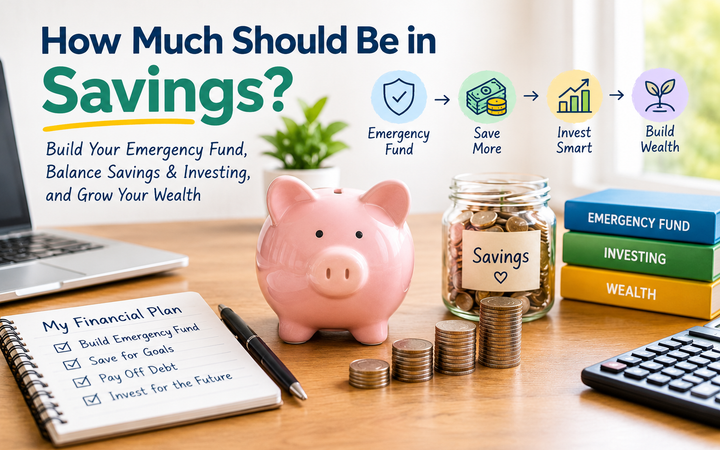
Earn → Track → Budget → Save → Build emergency reserves → Manage debt → Invest → Review
The early steps create financial stability.
The later steps give long-term money an opportunity to grow.
Investor.gov describes regular saving and investing over time as part of a wealth-building approach and emphasizes the importance of controlling high-interest debt and maintaining emergency savings.
This is also why a small monthly saving habit should not automatically be dismissed as insignificant.
The goal is to create a financial system that you can maintain.
A Simple Personal Finance Plan for Beginners
If you are starting from zero, do not try to change everything at once.
Step 1: Track
Write down your income and expenses.
Step 2: Budget
Create a monthly spending plan based on your real numbers.
Step 3: Cut
Look for expenses that provide little value.
Step 4: Save
Start building an emergency fund and other short-term savings.
Step 5: Reduce Expensive Debt
Focus on high-interest balances.
Step 6: Automate
Set recurring transfers for savings and, where appropriate, investments.
Step 7: Invest
Once your financial foundation supports it, invest according to your goals, time horizon, and risk tolerance.
Step 8: Review
Check your progress regularly and make adjustments when your income, expenses, or goals change.
You do not have to complete every step perfectly. The value comes from building a system that works with your actual financial situation.
Personal Finance Mistakes Beginners Should Avoid
Trying to Invest Before Fixing Cash Flow
If you regularly spend more than you earn, investing does not solve the underlying problem.
Start by understanding your income and expenses.
Using Emergency Savings for Normal Spending
An emergency fund loses its purpose when it becomes an everyday spending account.
Keep a clear distinction between emergency money and money for normal purchases.
Chasing Quick Returns
There is no reliable shortcut that turns a small amount of money into guaranteed large profits.
Investor.gov warns investors to be cautious of investment opportunities promising high returns with little or no risk.
Ignoring Interest and Fees
High-interest debt can consume money that could otherwise support savings or investing.
Investment fees can also affect long-term returns, so understand the costs associated with an investment before committing money.
Increasing Spending Every Time Income Rises
When your income increases, consider directing part of the increase toward savings, debt repayment, or long-term investing instead of automatically increasing every category of spending.
Personal Finance Tips for Beginners: FAQs
What are the best personal finance tips for beginners?
The most useful personal finance tips for beginners include tracking expenses, creating a budget, building an emergency fund, managing high-interest debt, automating savings, setting financial goals, and investing for appropriate long-term goals.
How should a beginner start managing money?
Start by understanding your cash flow. Record your income and expenses, create a realistic budget, and decide how much you can consistently save.
How much money should a beginner save each month?
There is no single savings amount that works for everyone. Your monthly savings target should fit your income, essential expenses, debt obligations, and financial goals.
How much should I keep in an emergency fund?
The appropriate amount depends on your circumstances. Some financial guidance discusses keeping enough savings for several months of expenses or income, but the right target depends on factors such as income stability and household responsibilities. Investor.gov notes that some people keep up to six months of income in savings.
Should I save money or pay off debt first?
The answer depends on the type and interest rate of the debt, your emergency savings, and your overall financial situation. High-interest debt deserves particular attention because its cost can be substantial.
When should beginners start investing?
Consider investing after you understand your cash flow and have considered emergency savings and expensive debt. The appropriate timing depends on your goals, time horizon, and financial circumstances.
Can I start investing with a small amount?
Yes. The amount is only one part of the decision. You should also understand what you are buying, the potential risks, fees, and whether the investment matches your financial goals.
What is the difference between saving and investing?
Saving generally focuses on keeping money accessible for short-term needs and emergencies. Investing involves market risk and is generally intended for longer-term goals where you have more time to handle fluctuations.
Why is budgeting important?
Budgeting helps you understand how much money is available after your regular expenses. It can also help you decide how much to allocate toward savings, debt repayment, and long-term goals.
Final Thoughts
You do not need a complicated financial strategy to get started.
The strongest personal finance tips for beginners are practical: know your numbers, create a budget, save for emergencies, deal with expensive debt, automate your savings, set clear goals, and invest carefully for the long term.
Your financial situation will change over time, so your plan should change with it.
Start with one improvement this month. Then build on it.