How Much Should You Have Saved by 40? Proven 2026 Numbers

How much should you have saved by 40? The most widely used benchmark says roughly 3 times your annual salary in retirement accounts — so someone earning $75,000 would target around $225,000. But that number only tells part of the story, and most people aren’t close to it, which is more normal than it sounds.
How Much Should You Have Saved by 40? (Quick Facts)
| Benchmark | Target at 40 | Source |
|---|---|---|
| Salary-multiple rule | 3x annual salary | Widely cited industry benchmark (Fidelity-style framework) |
| Average 401(k) balance (all ages) | $167,970 | Vanguard’s “How America Saves 2026” report |
| Median 401(k) balance (all ages) | $44,115 | Vanguard’s “How America Saves 2026” report |
| 2026 401(k) contribution limit | $24,500/year | IRS 2026 cost-of-living adjustment (Notice 2025-67) |
| 2026 IRA contribution limit | $7,500/year | IRS 2026 cost-of-living adjustment (Notice 2025-67) |
| Recommended savings rate | 15-20% of gross income | MassMutual retirement guidance |
Where the “3x Salary by 40” Number Actually Comes From
This benchmark comes from a salary-multiplier framework that’s become the industry standard reference point, and MassMutual’s guidance for savers in their 40s repeats the same figure: three times your salary saved by age 40.
The full scale usually looks like this: roughly 1x salary by 30, 3x by 40, 6x by 50, 8x by 60, and 10x by a traditional retirement age around 67. These numbers assume you started saving in your mid-20s, contribute consistently, and hold a mostly stock-based portfolio for most of that time.
It’s a compass, not a report card. If you’re below it, you’re in the majority — not a failure.
What Americans Actually Have Saved (Median vs. Average)
The average U.S. 401(k) balance across all age groups sits at $167,970, but the median — the number that better reflects a typical person — is only $44,115, according to Vanguard’s 2026 “How America Saves” report. That massive gap exists because a small group of high earners with large balances pull the average way up.
That pattern holds true at every age bracket, including 40-year-olds. A relatively small number of people with six-figure balances make the “average” number look a lot healthier than what most 40-year-olds are actually sitting on.
If your number is closer to the median than the 3x-salary target, you’re not an outlier — you’re the norm.
2026 Retirement Account Limits (Know Your Room to Catch Up)
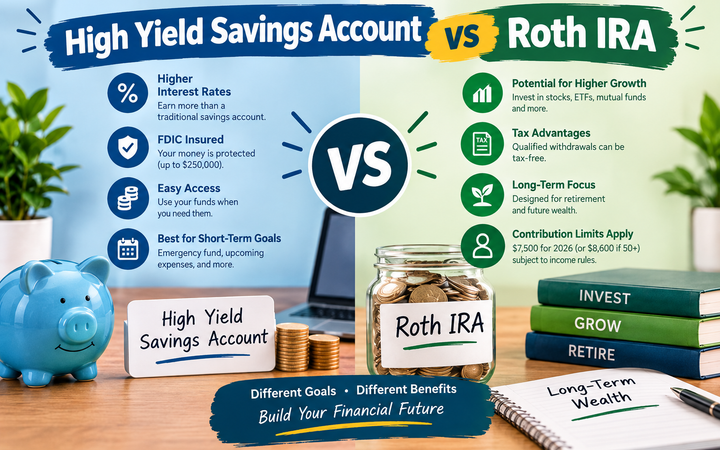
The IRS raised contribution limits for 2026, giving people who want to close the gap more room than they had the year before. The 401(k) limit is now $24,500 per year, up from $23,500 in 2025, and the IRA limit rose to $7,500, according to IRS Notice 2025-67 coverage.
At 40, you’re not yet eligible for catch-up contributions — those start at 50 — but knowing the full room available now matters if your income allows you to push contributions higher while time is still working in your favor.
If You’re Behind: A Realistic Catch-Up Plan
Being behind the 3x benchmark at 40 doesn’t mean starting over — it means being deliberate about where the next dollar goes. A few moves that actually close the gap:
- Capture the full employer match first. It’s an immediate, guaranteed return before the money is even invested — leaving it unclaimed is the single most common way people fall behind.
- Raise your contribution rate gradually. Many plans let you set automatic 1% annual increases, so the adjustment happens without a fresh decision every year.
- Build the emergency fund and investing side by side, not one before the other — our guide to building an emergency fund while investing walks through exactly how to sequence that on a tight budget.
- Don’t let debt payoff stall investing entirely. Pay high-interest debt aggressively, but keep at least the employer match going in the background.
MassMutual’s own modeling shows a 40-year-old saving around $305 every two weeks, at an assumed 8% annual return, could reach roughly $1 million by 65 — the math still works, it just requires starting now rather than waiting for a “better” moment.
Net Worth by 40 Is Bigger Than Retirement Accounts
Retirement savings benchmarks only measure one slice of the picture. A full net-worth view at 40 also includes home equity, taxable brokerage accounts, an emergency fund, and any remaining debt subtracted out.
Two people can hit the exact same “3x salary” retirement target and be in very different financial positions once you factor in a mortgage balance, high-interest debt, or a fully-funded emergency reserve. For a fuller financial checkup, it helps to look at building a full emergency and investing foundation alongside the retirement number, not instead of it.
Frequently Asked Questions
How much should I have saved by 40? The most common benchmark is 3 times your annual salary in retirement accounts, though the typical American has considerably less than that.
What is the average retirement savings for a 40-year-old? There’s no official age-40-specific average from Vanguard’s most recent report, but across all age groups the average 401(k) balance is $167,970 and the median is $44,115 — and averages are pulled up by a small group of high earners.
Is it too late to catch up on retirement savings at 40? No. Raising your contribution rate and capturing your full employer match now still leaves 20+ years of compounding before a typical retirement age.
What are the 2026 401(k) and IRA contribution limits? $24,500 for 401(k) plans and $7,500 for IRAs in 2026, per the IRS’s cost-of-living adjustment.
Should I pay off debt or save for retirement at 40? Keep contributing at least enough to get your full employer match while paying down high-interest debt aggressively; don’t stop retirement contributions entirely to accelerate debt payoff.
Does net worth by 40 include my house? Yes — retirement-savings benchmarks only cover retirement accounts, while total net worth includes home equity, other savings, and debts subtracted out.
What if I have $0 saved for retirement at 40? You’re behind the benchmark but not unusual — the priority becomes capturing any employer match immediately and building a contribution habit, even starting small.
How much difference does starting at 40 versus 30 actually make? It makes a meaningful difference because there are fewer compounding years left, but the amount varies a lot based on your contribution rate and investment returns — a personalized retirement calculator gives a more accurate answer than a generic rule of thumb.