How Much Should You Keep in Savings? A Proven 2026 Guide
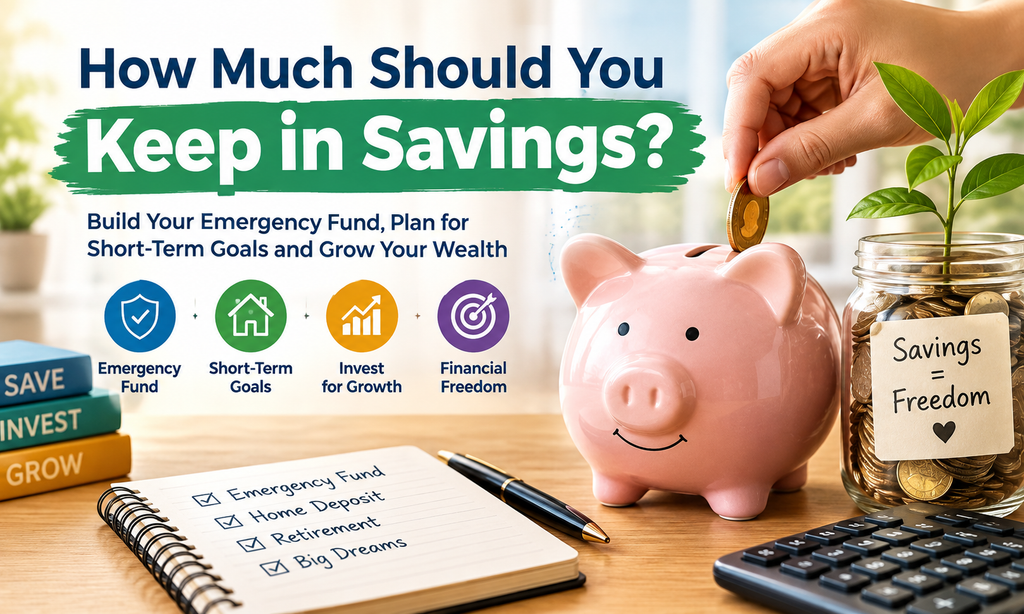
How much should you keep in savings? For most people, the answer is $1,000 to start, then 3 to 6 months of essential expenses in an emergency fund, according to Fidelity’s savings guidance. That’s not 3 to 6 months of your salary — it’s 3 to 6 months of what it actually costs you to get by.
How Much Should You Keep in Savings? (Quick Facts)
| Question | Answer | Source |
|---|---|---|
| Starter emergency fund | $1,000 | Fidelity |
| Full emergency fund target | 3-6 months of essential expenses | Fidelity, Chase |
| Single-income or variable income | Lean toward 6 months | Common guidance among financial planners |
| Average savings account APY (2026) | 0.38% | FDIC, via U.S. News |
| High-yield savings account APY (2026) | Roughly 3-4% | Widely available HYSA rates as of 2026 |
| Long-term total savings rate | 15-20% of income | Common financial-planning benchmark |
The Core Rule: 3 to 6 Months of Essential Expenses
The most consistent answer to how much should you keep in savings comes from major banks themselves. Chase’s guide to emergency funds puts it plainly: your fund should cover 3 to 6 months of living expenses, not income.
That distinction matters. Rent, utilities, debt minimums, groceries, and insurance count. Entertainment, dining out, and subscriptions don’t — those are the first things you’d cut if money got tight, so they shouldn’t inflate your target number.
If your essential expenses run $2,500 a month, your range is $7,500 to $15,000. That’s the number to build toward, not $1,000 and done.
Who Should Save Closer to 6 Months (Not 3)
Not everyone needs the same cushion. A two-income household with stable jobs can often lean toward the 3-month end of the range, since a job loss for one partner doesn’t zero out the household income.
A single-income household, a freelancer, or anyone with irregular pay has less of a buffer if something goes wrong — which is exactly why leaning toward 6 months (or more) makes sense in that situation. Britannica Money’s guidance frames this as a balance: you’re weighing the risk of running short against the cost of over-funding a low-return account.
Where to Actually Keep Your Savings
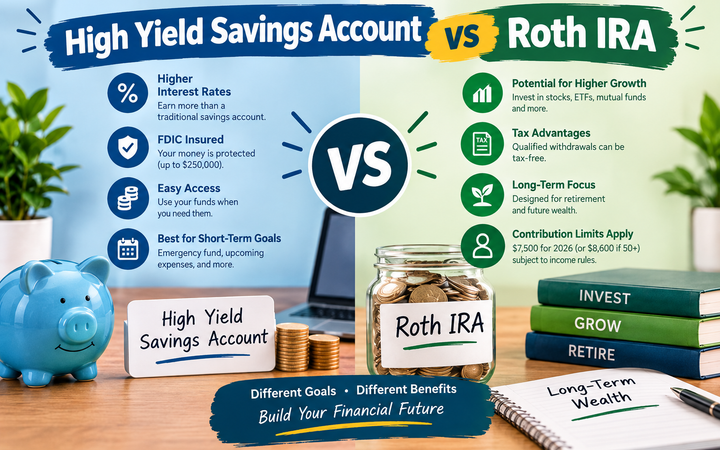
Knowing how much should you keep in savings only solves half the problem — where you keep it matters almost as much. The FDIC’s national average savings account rate was just 0.38% as of mid-2026, reported by U.S. News. That’s essentially losing money to inflation every year it sits there.
A high-yield savings account (HYSA), by contrast, has been paying somewhere in the 3-4% range through 2026 at many online banks. Same FDIC insurance, same liquidity, dramatically better return on money that’s just sitting in reserve.
Keep the account separate from your everyday checking. Money that’s one tap away tends to get spent on things that aren’t emergencies.
Comparing Where to Park Your Savings
| Account Type | Typical Liquidity | Typical 2026 Return | Best For |
|---|---|---|---|
| Standard checking | Instant | Near 0% | Daily spending only, not savings |
| Standard savings account | Instant | ~0.38% (FDIC average) | Not recommended for a full emergency fund |
| High-yield savings account | Instant to 1-2 days | ~3-4% | Full emergency fund |
| Money market account | Instant, some check-writing | ~0.66% national average, higher at online banks | Emergency fund with occasional access needs |
| Certificate of deposit (CD) | Locked until maturity | Often 3-4%+ | Only for money you won’t need on short notice |
A CD can look tempting because of the rate, but locking away emergency money defeats the purpose — if the emergency hits before maturity, an early withdrawal penalty eats into the very funds you needed.
Recalculating Your Target as Life Changes
The number you land on isn’t permanent. A new mortgage, a new child, a job change to variable income, or a move to a higher cost-of-living area all shift what “essential expenses” actually adds up to.
A good habit is revisiting the number once a year, or any time a major expense changes — not obsessively, but enough that a fund sized for your life five years ago doesn’t quietly stop matching your life today. If rent doubled but the emergency fund didn’t move with it, the cushion is smaller than it looks on paper.
Inflation plays a role here too. A fund that covered 4 months of expenses two years ago may only stretch to 3 months now if costs have risen and the balance hasn’t kept pace — another reason a high-yield account matters, since at least some of that growth offsets rising costs instead of losing ground to them.
How the Right Number Shifts by Life Stage
Early career, few obligations. A smaller cushion — sometimes closer to 3 months — can be reasonable if expenses are low, there’s no dependent relying on your income, and re-employment prospects are strong in your field.
Homeowner or parent. Fixed costs go up, and so does the cost of a disruption. Mortgages, childcare, and family expenses tend to push the target toward the 6-month end of the range, since there’s more that can’t simply be paused.
Self-employed or commission-based income. Irregular income is the clearest case for leaning past 6 months. Some financial planners suggest self-employed households aim for 9-12 months, since income itself — not just expenses — can be unpredictable.
Nearing retirement. A larger cash cushion is often recommended in the years right before retirement, so a market downturn right at that transition doesn’t force selling investments at a loss to cover near-term living costs.
None of these are rigid rules. They’re a starting point for adjusting the standard 3-6 month range to a specific situation, rather than treating one number as correct for everyone.
Common Mistakes People Make With Savings
Confusing “income” with “expenses” when calculating the target. A 3-6 month fund based on your full paycheck is a much bigger, often unrealistic number than one based on actual essential costs — and it can discourage people from starting at all.
Leaving the fund in a 0.38% account for years. The gap between a standard savings account and a high-yield one isn’t small — on a $10,000 balance, that’s hundreds of dollars a year left on the table for no added risk.
Treating the emergency fund as untouchable no matter what. It exists to be used. A fund that never gets touched during an actual emergency, in favor of a credit card, isn’t doing its job.
Stopping all other savings until the emergency fund is “perfect.” Waiting for 6 full months before contributing anything to retirement can cost years of compounding — building both at a slower pace simultaneously often works out better long term.
Not replenishing after a withdrawal. Life happens, and the fund will get used. The habit that matters most isn’t never touching it — it’s automatically rebuilding it afterward, the same way it was built the first time: a fixed, automated amount each payday until the balance is back to target.
Starting From Zero: How to Build It
If you’re starting with nothing, the $1,000 starter target is deliberately small — it’s meant to be reachable in weeks, not years. It’s also intentionally not tied to your income, because the goal at this stage isn’t a perfect number, it’s breaking the cycle of having zero buffer between you and a surprise expense. A few ways it gets built on a real budget:
- Automate a fixed transfer on payday, even $25-$50, so the decision only gets made once. Most banks let you schedule this the same day you set up direct deposit, so the money moves before it has a chance to get spent elsewhere.
- Redirect one recurring cost — a subscription or a delivery habit — straight into savings until the starter fund is full. This works especially well because it doesn’t feel like a new sacrifice; the money was already leaving your account, it’s just landing somewhere more useful.
- Send windfalls there first. A tax refund or bonus can close most of the gap in a single deposit, and because it wasn’t money you were counting on for regular expenses, it rarely feels like a loss to redirect it.
Once the starter fund exists, the 3-6 month target becomes the next milestone, typically built gradually while other financial goals run alongside it — our guide to building an emergency fund while investing covers exactly how to sequence that on a tight budget.
What About Savings Beyond the Emergency Fund?
Once the emergency fund is fully built, “how much should you keep in savings” turns into a different question — how much should keep flowing into savings and investing every month going forward. A commonly cited long-term target is around 15-20% of gross income across retirement accounts and other savings combined, once essential expenses and debt minimums are covered.
That percentage doesn’t need to be hit immediately. Many people start lower and raise it by a percentage point or two each year as income grows — the same incremental approach that works for retirement contributions also works here, as covered in our breakdown of how much you should have saved by 40.
Frequently Asked Questions
How much should I have in savings at all times? Most guidance points to $1,000 as a starter minimum, building toward 3-6 months of essential expenses as your full emergency fund.
Is $1,000 enough for an emergency fund? It’s enough to absorb a small emergency like a car repair, but it’s a starting point, not the final target — 3-6 months of expenses is the fuller goal.
What percentage of income should go to savings? There’s no single number that fits everyone, but 15-20% of gross income is a common long-term benchmark once your emergency fund is built.
Should my emergency fund cover expenses or income? Expenses. Rent, utilities, debt minimums, food, and insurance count; discretionary spending like entertainment doesn’t need to be included.
Where should I keep my emergency fund? A high-yield savings account, which offers FDIC insurance and full liquidity while paying meaningfully more interest than a standard savings account.
Should I invest my emergency fund for better returns? No — emergency savings should stay in cash or a cash-equivalent account so it’s available immediately without risk of loss when you need it.
Do I need 6 months of savings if I have a stable dual income? Not necessarily. Many planners suggest 3 months is reasonable for stable dual-income households, while single-income or variable-income households should lean toward 6.
Can I have too much in savings? Yes — money sitting far beyond your emergency fund target in a low-yield account is money that could be growing faster in investments, so most people shift the surplus once the cushion is complete.
How long does it typically take to build a full emergency fund? It depends entirely on income and expenses, but automating even a small fixed amount each payday consistently gets people there faster than waiting to save whatever’s left over at the end of the month.