Relationship With Money: 9 Powerful Steps to Invest Smarter

Your relationship with money influences more than how much you spend or save. It can affect how you set financial goals, respond to risk, handle setbacks, and decide whether to invest for the future.
A healthy relationship with money does not mean never spending or worrying about finances. It means understanding what your money is supposed to do and making choices that support your needs today while leaving room for tomorrow. The Consumer Financial Protection Bureau (CFPB) describes financial well-being in terms of financial security, control over day-to-day finances, the ability to absorb a financial shock, progress toward goals, and freedom of choice.
That makes money management more than a numbers exercise. Your habits, beliefs, goals, and financial decisions all work together.
For investors, this matters even more. Saving can provide a safety cushion, while investing gives money intended for longer-term goals an opportunity to grow, although investments also involve risk. Investor.gov recommends thinking about goals, time horizon, risk, diversification, saving, and investing as connected parts of a financial plan.
What Does Relationship With Money Mean?
A relationship with money is the way you think about, use, manage, and make decisions about money.
It includes your everyday behavior. Do you check your spending regularly? Do you save before spending everything? Do you avoid looking at your accounts? Do you spend more when you feel stressed? Do you feel comfortable setting financial goals?
There is no single personality type that guarantees good financial decisions.
Someone may earn a high income but have little control over spending. Another person may earn less but have a clear budget, emergency savings, manageable debt, and a consistent investment plan.
The CFPB notes that financial well-being cannot be described only by income, net worth, or credit score. It also involves security, financial behavior, and the ability to make choices that support your life.
That is why improving your money habits can be useful even when your income has not changed.
Why Your Relationship With Money Matters for Investing
Investing is not only about choosing an asset.
It is also about how you behave before, during, and after an investment decision.
Imagine two people who have the same amount available to invest. One person has a clear emergency fund, understands their time horizon, and expects investments to fluctuate. The other invests money they may need next month and becomes anxious when the market moves down.
They may own the same investment, but their financial situations are very different.
Investor.gov explains that investing involves a greater possibility of losing money than saving, while also providing the opportunity for growth. It also recommends understanding investment risk and choosing investments that fit your circumstances.
A healthier relationship with money can therefore help you ask better questions:
- Why am I investing?
- When will I need this money?
- How much risk can I reasonably take?
- Do I have enough emergency savings?
- Am I investing consistently?
- Do I understand what I own?
- Am I reacting to short-term market movements?
- Does this investment fit my financial goals?
These questions can be more useful than simply asking which investment is currently popular.
9 Ways to Build a Healthy Relationship With Money
1. Know Where Your Money Goes
The first step toward a healthier relationship with money is awareness.
You cannot make a realistic financial plan if you do not know how much money comes in or where it goes.
Start by reviewing one month of transactions. Divide spending into practical categories such as:
- Housing
- Utilities
- Groceries
- Transportation
- Insurance
- Debt payments
- Subscriptions
- Entertainment
- Shopping
- Savings
- Investments
Do not use this exercise to criticize yourself.
Use it to understand your current behavior.
You may find that your biggest problem is not one expensive purchase. It could be several smaller recurring expenses that have become automatic.
Investor.gov recommends taking an honest look at your financial situation, tracking income and expenses, and including savings and investing in your financial plan.
Investing connection: Once you know your regular spending, you can identify how much money may realistically be available for long-term investing.
For a deeper budgeting guide, you can also read What Can a Budget Help You Do? 9 Powerful Benefits.
2. Stop Treating Spending as a Personal Failure
Spending money is not automatically bad.
You need to spend money on housing, food, transportation, healthcare, family responsibilities, and other necessities. You may also choose to spend money on entertainment, travel, hobbies, or experiences.
The goal is not to eliminate spending.
The goal is to make spending intentional.
A useful question before a non-essential purchase is:
“Does this purchase support something I actually value?”
That simple question can create a pause between wanting something and buying it.
A healthy money plan should leave some room for enjoyment. A budget that makes every purchase feel like a mistake may be difficult to maintain.
The better approach is to decide in advance what matters to you and give those priorities space in your budget.
Investing connection: When spending reflects your actual priorities, it becomes easier to identify money that can consistently be directed toward long-term investments.
3. Build Savings Before Expecting Investments to Solve Everything
Investing is designed for long-term goals. It should not automatically replace an emergency fund.
Investor.gov explains that savings are generally appropriate for emergency funds and short-term needs because the money needs to remain accessible. It also notes that some investors keep enough savings to cover emergencies, with some keeping up to six months of income.
Your own target depends on your circumstances.
Someone with stable employment and low fixed costs may have different needs from someone with irregular income, dependents, or significant monthly obligations.
The important distinction is that emergency savings and investments have different jobs.
Emergency savings:
- Protect against unexpected expenses
- Provide accessible cash
- Reduce the need to borrow during a financial shock
Long-term investments:
- Support future financial goals
- Provide an opportunity for growth
- Carry investment risk
If you want to explore this topic in more detail, WealthNivo’s guide on How Much Should Be in Savings? explains how to think about an emergency fund based on essential expenses.
4. Replace “I’m Bad With Money” With a Specific Problem You Can Solve
One of the least useful financial statements is:
“I’m just bad with money.”
It sounds like an identity rather than a problem.
Instead, identify the exact behavior.
Maybe you:
- Spend too much on food delivery.
- Forget annual bills.
- Use credit cards for unexpected expenses.
- Do not track subscriptions.
- Avoid checking your account.
- Save only when money is left at the end of the month.
- Feel nervous about investing.
- Increase spending whenever your income rises.
Each of these is a specific behavior.
And specific behaviors can be changed.
The CFPB’s research and educational material connects financial skills, behaviors, confidence, and financial well-being. Its research describes a pathway in which financial skills can contribute to financial behavior, which can affect financial circumstances and financial well-being.
That is a much more practical way to think about financial improvement.
You do not have to become a completely different person.
You can change one repeatable habit.
5. Create Financial Goals That Have a Purpose
Saving without a purpose can become frustrating.
Instead of saying:
“I need to save more.”
Give the money a job.
For example:
- Build a $5,000 emergency reserve.
- Pay off a high-interest credit card.
- Save for a home deposit.
- Build retirement savings.
- Invest a fixed amount every month.
- Save for a future education expense.
- Create a travel fund.
Investor.gov recommends defining financial goals and considering how many years you have to meet each goal because the time frame can influence whether saving or investing is appropriate.
This is especially important for investing.
Money needed next year and money needed 25 years from now do not necessarily belong in the same type of financial strategy.
Investing connection: Your goal gives your investment plan a reason to exist.
6. Make Saving and Investing Automatic
Consistency can be easier when you remove some of the decision-making.
Instead of asking yourself every payday:
“Should I save this month?”
Create a system that moves money automatically.
You might arrange an automatic transfer into savings after receiving your paycheck. Once your emergency savings and other priorities are on track, you may also automate regular contributions to an appropriate investment or retirement account.
Investor.gov specifically discusses automatic deposits as one way people can develop regular saving and investing habits.
The amount does not have to be huge.
What matters is that the contribution fits your financial situation and can be maintained.
Over time, consistency can become more important than occasional bursts of motivation.
A simple example
Suppose someone decides to invest $100 every month.
Instead of waiting for the “perfect” month, the contribution becomes part of the person’s normal financial routine.
If their income later increases, they can review whether the contribution should increase too.
The point is not that $100 is the right amount for everyone. It is that a repeatable system can make long-term financial behavior easier.
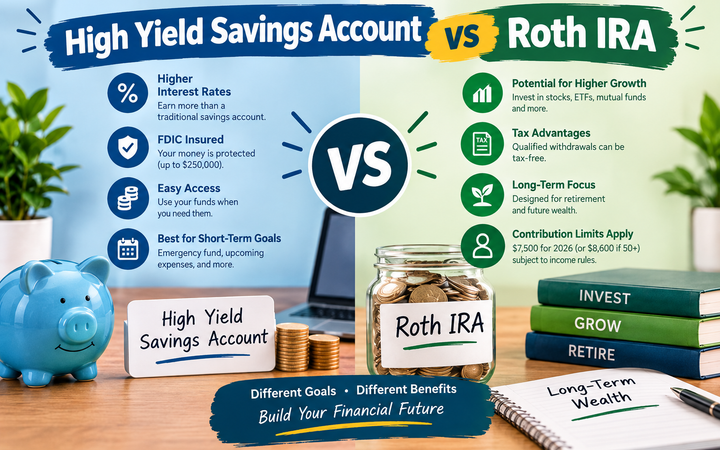
7. Learn the Difference Between Saving and Investing
A healthy relationship with money includes knowing that saving and investing are not the same thing.
Saving generally focuses on accessibility and preservation for shorter-term needs.
Investing involves taking risk with the possibility of earning a return over time.
Investor.gov states that investments such as securities are not federally insured in the way eligible bank deposits can be, and investors can lose their principal. At the same time, investing provides an opportunity to earn more over the long term.
That trade-off matters.
If you put your emergency fund into a volatile investment, the value could be lower precisely when you need the money.
On the other hand, if you keep every dollar for a decades-away goal in cash, you may give up the potential growth associated with investing.
A simple framework is:
Emergency money → accessible savings
Near-term money → appropriate low-risk options
Long-term money → investments suited to your goals and risk tolerance
The exact strategy depends on your situation.
8. Don’t Let Fear or Excitement Make Your Investment Decisions
Emotions are part of being human.
The problem begins when an emotional reaction turns into a financial decision without a plan.
For example, someone may see a market decline and immediately want to sell everything. Another person may see an asset rising quickly and feel pressure to buy because everyone else seems to be making money.
Neither reaction automatically produces a good decision.
Investor.gov recommends understanding risk tolerance, diversification, investment options, and financial goals before investing.
A written investment plan can help create a reference point.
Before investing, consider writing down:
- Your goal
- Your time horizon
- Your expected contribution
- Your acceptable level of risk
- Why you selected the investment
- When you will review your plan
This does not eliminate risk.
It simply gives you something more solid than a headline or social-media post to guide your decisions.
9. Think About Money as a Tool, Not a Scorecard
Your bank balance is useful information.
Your net worth is useful information.
Your investment balance is useful information.
But none of these numbers alone tells you whether you are making progress toward the life you want.
The CFPB emphasizes that financial well-being includes security and freedom of choice, not simply a particular income or net-worth figure.
That can change the way you think about wealth.
Instead of asking:
“Do I have more money than someone else?”
Ask:
“Is my money helping me meet my responsibilities and work toward my goals?”
That is a more useful measure.
Money can provide choices. It can help you handle emergencies, reduce financial stress, fund important goals, and support long-term plans.
Investing can be one part of that process.
How Your Money Habits Affect Your Investment Plan
Your investment strategy does not exist separately from the rest of your finances.
Consider a simple example.
Person A earns $5,000 per month but spends almost all of it. They have no emergency savings and carry expensive credit-card debt.
Person B earns $4,000 per month, tracks expenses, maintains an emergency reserve, manages debt, and consistently invests a portion of their income for long-term goals.
Income alone does not explain the difference.
The underlying money systems matter.
Investor.gov’s wealth-building guidance recommends controlling high-interest credit-card debt, maintaining emergency savings, leaving room in the budget for saving and investing, and investing regularly for long-term goals.
That is why improving your relationship with money can have an investing role.
You are not trying to become obsessed with money.
You are trying to create a system in which your money has clear jobs.
How to Create a Money System That Supports Investing
A simple system can have five parts.
1. Income
Know what comes into your household each month.
2. Essential spending
Cover housing, food, utilities, transportation, insurance, debt obligations, and other necessary costs.
3. Emergency savings
Build accessible savings appropriate for your circumstances.
4. Short-term goals
Keep money for upcoming needs separate from long-term investment money.
5. Long-term investing
Direct appropriate surplus toward investments that match your goals, time horizon, and risk tolerance.
This structure can make financial decisions easier because you do not have to ask what every dollar should do from scratch.
Relationship With Money and the Psychology of Comparison
Comparison can quietly influence financial behavior.
You might see someone buying a new car, taking an expensive vacation, buying a home, or posting about investment gains.
What you cannot see is the complete financial picture behind that purchase.
You may not know:
- Their income
- Their debt
- Their savings
- Their family responsibilities
- Their monthly expenses
- Whether the purchase was financed
- Whether their investment gains were temporary
- What financial goals they have
Comparing your financial life with a carefully selected part of someone else’s life can lead to unnecessary spending or risky investing.
A better benchmark is your own progress.
Are you saving more consistently?
Is expensive debt decreasing?
Is your emergency fund improving?
Are you investing according to your plan?
Are your financial decisions becoming more intentional?
Those questions provide information you can actually use.
How to Handle Emotional Spending
Emotional spending does not mean every enjoyable purchase is a problem.
The concern is repeated spending that happens mainly as a reaction to stress, boredom, sadness, pressure, or social comparison.
A simple technique is to introduce a waiting period for non-essential purchases.
For example:
Small purchase: wait until the next day.
Large purchase: give yourself several days to review it.
During that pause, ask:
- Do I actually need this?
- Did I plan for it?
- Can I afford it without using money needed for bills or savings?
- Does it support one of my goals?
- Would I still want it if nobody else knew I bought it?
You may still decide to purchase it.
That is fine.
The goal is to make the decision consciously rather than automatically.
Relationship With Money and Financial Education
You do not need to know everything about finance.
But you should understand the basics before putting significant money at risk.
Start by learning:
- How budgeting works
- How interest works
- How credit works
- How emergency funds work
- How investment risk works
- What diversification means
- How fees affect investments
- What your investment time horizon is
- How retirement accounts work in your country
Investor.gov provides educational resources covering goals, saving, investing, risk tolerance, diversification, and investment options.
Outbound resource: For an authoritative introduction to saving and investing, see Investor.gov — Saving and Investing.
That resource is especially useful for beginners because it explains the relationship between financial planning, saving, investing, risk, and long-term financial security.
How to Improve Your Relationship With Money in 30 Days
You do not need a complicated financial makeover.
Try this four-week approach.
Week 1: Observe
Track every major expense.
Do not try to change everything yet.
Simply learn what is happening with your money.
Week 2: Organize
Create categories for:
- Essential expenses
- Debt
- Emergency savings
- Short-term goals
- Investing
- Lifestyle spending
Now you can see where your money needs to go.
Week 3: Automate
Set up appropriate automatic transfers for savings and, where suitable, investing.
Start with an amount you can realistically maintain.
Week 4: Review
Ask:
- What improved?
- Where did I overspend?
- What expense surprised me?
- Did I save consistently?
- Am I ready to increase my savings or investment contribution?
- What financial goal should I focus on next?
Then repeat the process next month.
The goal is not perfection.
The goal is a financial system that gets easier to follow over time.
A Simple Relationship With Money Checklist
Use this checklist once a month:
- I know my monthly income.
- I reviewed my spending.
- I know how much I saved.
- I know how much debt I owe.
- I made progress on my emergency fund.
- I avoided unnecessary high-interest debt.
- I contributed toward my long-term goals.
- I reviewed my investment plan if needed.
- I avoided making investment decisions based only on hype.
- I know my next financial goal.
You do not have to check every box immediately.
Use the checklist to identify the next area that needs attention.
Relationship With Money: Saving Is the Foundation, Investing Is the Growth Layer
A strong relationship with money does not mean choosing saving over investing.
It means understanding when each one makes sense.
Savings can provide protection.
Budgeting can provide control.
Debt management can reduce financial pressure.
Investing can give long-term money an opportunity to grow.
Financial education can help you make better decisions across all four.
Investor.gov’s guidance brings these ideas together by encouraging people to define goals, understand their finances, address high-interest debt, save for emergencies, understand investments, diversify, and consider risk tolerance.
That is the investing role of a healthy money mindset.
You are not simply trying to accumulate the biggest possible bank balance.
You are building a financial system that separates money by purpose.
How Relationship With Money Can Support Long-Term Wealth
Long-term wealth usually requires more than one good decision.
It requires repeated behavior.
You earn money.
You manage expenses.
You save.
You deal with debt.
You invest.
You continue learning.
You review your goals.
Then you repeat the process.
Investor.gov notes that regular investing combined with time can help people build wealth, while also emphasizing that investments are not guaranteed to make money.
This is why your daily financial habits matter.
A person who regularly saves and invests may be building a very different financial future from someone who repeatedly spends every increase in income.
The difference is not always dramatic in one month.
It becomes more meaningful over many years.
The Bottom Line
Your relationship with money is not about being rich, perfect, or extremely strict with your spending.
It is about having a clear understanding of what money means in your life and creating habits that support your priorities.
Start by tracking your spending.
Build appropriate emergency savings.
Manage high-interest debt.
Set clear goals.
Automate saving where possible.
Learn the basics of investing.
Understand risk.
Avoid making investment decisions based only on fear, excitement, or comparison.
Then give your long-term money enough time to work toward your goals.
A healthy relationship with money can make investing more intentional because you are no longer asking your investments to solve every financial problem. Your emergency fund handles emergencies. Your budget handles spending. Your debt plan handles repayment. Your investments can then focus on appropriate long-term goals.
That separation can make your overall financial plan clearer and easier to maintain.