Single Mom Budget 2026: A Proven, Stress-Free Savings Plan
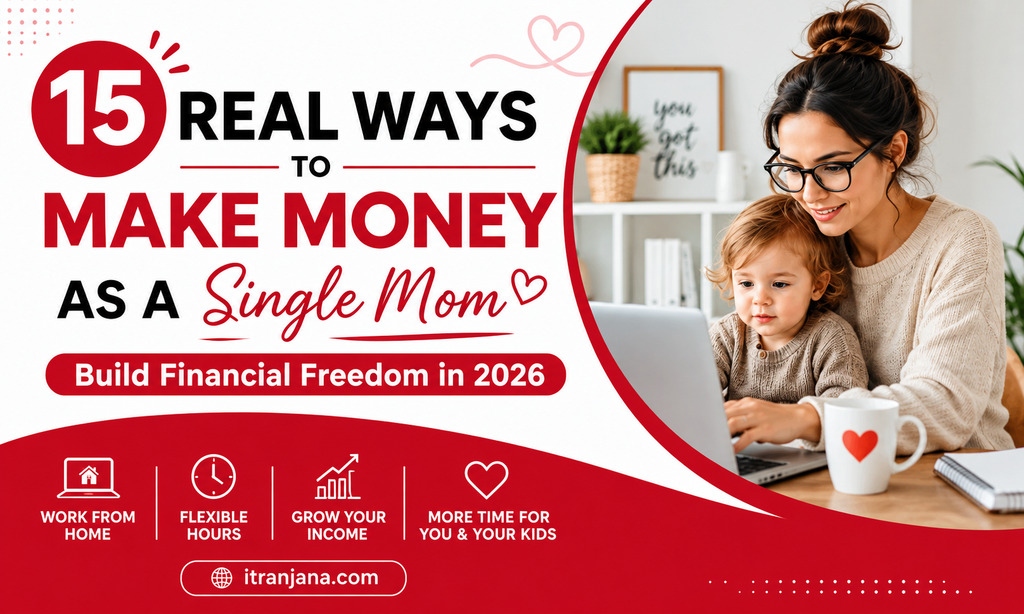
A single mom budget works best when it’s built around one goal at a time — first a small emergency cushion, then consistent investing, in that order. Trying to do both at once usually means neither one sticks. This guide walks through exactly how to structure a one-income household budget so there’s real room for savings, without pretending the math is easy.
Why the Order Matters: Savings Before Investing
Most budgeting advice throws “save and invest” into the same sentence like they’re one step. For a single-income household, they’re not.
An emergency fund is money you can touch in 24 hours without a penalty or a market dip deciding how much you get back, as the Consumer Financial Protection Bureau explains in its emergency savings guidance. Investments are money you’re deliberately not touching for years. If you invest before you have a cushion, a broken car or a sick kid can force you to sell investments at the worst possible time — often at a loss.
The order that actually protects you: a small starter emergency fund first, then investing, then building the emergency fund up to a fuller amount alongside it.
A Single Mom Budget Framework (Quick Overview)
| Budget Category | Target Range | Notes |
|---|---|---|
| Needs (housing, food, childcare, utilities) | 50-65% of income | Often higher than the classic 50% rule for one-income households — that’s normal |
| Debt minimums | Included in needs | Pay minimums here; extra debt payoff comes after starter fund |
| Starter emergency fund | Build to $500-$1,000 first | This is the priority before investing anything |
| Investing (retirement accounts) | 5-15% once starter fund exists | Start small and automate; percentage matters less than consistency |
| Full emergency fund | 3-6 months of expenses | Built gradually alongside investing, not before it |
These ranges aren’t universal law — they’re a starting point to adjust based on your actual paycheck, local cost of living, and whether child support or a second income is part of the picture.
Step 1: Build a Budget That Reflects Reality, Not a Formula
The 50/30/20 rule was designed with a two-income household in mind, and on one income, needs routinely eat more than 50%. Fighting that number instead of adjusting it is a common reason budgets fail in the first month.
Start by tracking every dollar for 30 days — bank statements and card history work fine, you don’t need an app. If the tracking itself feels overwhelming, our breakdown of budgeting methods for one-income households walks through a few simpler systems to try. Sort spending into three buckets: needs, wants, and savings. Then look honestly at which “wants” are actually providing value and which ones are just habits.
Childcare deserves its own line item, not a spot inside “misc.” For a lot of single parents, it’s the second-largest expense after housing, and knowing the real number changes how the rest of the budget gets built.
Step 2: Build the Starter Emergency Fund First
Before touching investing, aim for a starter emergency fund of $500 to $1,000. This isn’t the “3-6 months of expenses” number you’ll hear elsewhere — that comes later. The starter fund exists for one purpose: to stop a flat tire or a school fee from becoming credit card debt.
A few ways this actually gets built on a single income:
- Automate a small, fixed amount right after payday — even $20-$25 per paycheck adds up faster than people expect.
- Redirect one recurring expense (a subscription, a delivery habit) directly into the fund until it hits the target.
- Save windfalls automatically — a tax refund, a bonus, or child support catch-up payments can fill this fund in one shot.
Once the starter fund exists, resist the urge to keep piling everything into savings before investing anything. That’s the mistake that quietly costs the most money over ten years.
Step 3: Start Investing — Even in Small Amounts
Once there’s a starter cushion, the next dollar should start going toward investing, even in small, automated amounts. The biggest driver of long-term investing results isn’t the size of the contribution — it’s how many years the money has to grow.
If a workplace retirement plan offers any employer match, that’s typically the first place to direct investing dollars, since it’s an immediate return before the money is even invested. After that, a low-cost retirement account works for most people who don’t have access to an employer plan — Investor.gov’s retirement basics page breaks down the account types in plain language.
Automating the contribution matters more than the amount. A recurring $25-$50 transfer that never has to be manually decided on beats a “someday I’ll invest more” plan that never actually starts. For a walkthrough of account types and where to open one, see our beginner’s guide to retirement accounts.
Step 4: Grow the Emergency Fund Alongside Investing
With investing running in the background, the emergency fund can now grow toward the fuller 3-6 month target — not because more is always better, but because a single income has no second earner to fall back on if a job is lost.
This doesn’t need to happen fast. Splitting extra savings capacity between the emergency fund and investing (rather than 100% into one before touching the other) tends to hold up better over a multi-year stretch, since life doesn’t pause either goal for the other.
Common Budgeting Mistakes That Set Single Moms Back
Treating the budget as permanent instead of a living document. Income, childcare costs, and expenses shift often enough that a budget built once and never revisited stops matching reality within a few months.
Skipping life insurance while building other savings. For a household with one income, life insurance isn’t optional — it’s part of protecting the financial plan itself, not a separate expense to “get to later.”
Waiting for a “big enough” amount to start investing. Small, consistent contributions beat waiting for extra income that may not show up on a predictable schedule.
Not separating needs from wants inside fixed categories. Housing and childcare get treated as fixed and untouchable, when even those sometimes have room to renegotiate or restructure.
Where to Find Extra Room in a Tight Budget
A few places single-income households often find money without cutting anything essential:
- Reviewing whether tax credits like the Earned Income Tax Credit or Child Tax Credit are being claimed correctly — see our full guide to claiming the Child Tax Credit and EITC for the current income limits
- Checking for local or state assistance programs tied to childcare, utilities, or food that go unused simply because they weren’t known about
- Auditing subscriptions and recurring charges every few months, since these tend to creep back up quietly
- Comparing insurance rates annually instead of auto-renewing
None of these require earning more — they just require reviewing what’s already being spent.
Frequently Asked Questions
How much should a single mom have in an emergency fund? Start with $500-$1,000 as a starter fund before investing, then grow it to 3-6 months of expenses over time, ideally alongside investing rather than before it.
Should a single mom pay off debt or save first? Build the small starter emergency fund first, keep paying debt minimums, then split extra money between debt payoff and investing based on the interest rate on the debt.
What percentage of income should go to savings as a single parent? There’s no fixed number that fits everyone, but many financial planners suggest starting around 5-10% once a starter emergency fund exists, increasing it as income allows.
Is investing worth it on a single income? Yes — small, automated contributions over many years matter more than the size of any single contribution, especially in tax-advantaged retirement accounts.
How does the 50/30/20 budget rule apply to single parents? It often doesn’t apply exactly, since needs regularly exceed 50% of income on one salary. Adjusting the percentages to reality works better than forcing the original ratio.
What’s the biggest budgeting mistake single moms make? Treating savings and investing as an either/or choice instead of building a small emergency cushion first, then running both goals side by side.
Should life insurance be part of a single mom’s budget? Yes, since there’s no second income to fall back on if something happens to the primary earner — it’s considered part of protecting the household’s financial plan, not an optional extra.
Can a single mom budget work without cutting all extras? Usually yes. Most tight budgets have more room in recurring subscriptions, unused benefits, and insurance shopping than in cutting every non-essential expense outright
A single mom budget works best when it’s built around one goal at a time — first a small emergency cushion, then consistent investing, in that order. Trying to do both at once usually means neither one sticks. This guide walks through exactly how to structure a one-income household budget so there’s real room for savings, without pretending the math is easy.
Why the Order Matters: Savings Before Investing
Most budgeting advice throws “save and invest” into the same sentence like they’re one step. For a single-income household, they’re not.
An emergency fund is money you can touch in 24 hours without a penalty or a market dip deciding how much you get back. Investments are money you’re deliberately not touching for years. If you invest before you have a cushion, a broken car or a sick kid can force you to sell investments at the worst possible time — often at a loss.
The order that actually protects you: a small starter emergency fund first, then investing, then building the emergency fund up to a fuller amount alongside it.
A Single Mom Budget Framework (Quick Overview)
| Budget Category | Target Range | Notes |
|---|---|---|
| Needs (housing, food, childcare, utilities) | 50-65% of income | Often higher than the classic 50% rule for one-income households — that’s normal |
| Debt minimums | Included in needs | Pay minimums here; extra debt payoff comes after starter fund |
| Starter emergency fund | Build to $500-$1,000 first | This is the priority before investing anything |
| Investing (retirement accounts) | 5-15% once starter fund exists | Start small and automate; percentage matters less than consistency |
| Full emergency fund | 3-6 months of expenses | Built gradually alongside investing, not before it |
These ranges aren’t universal law — they’re a starting point to adjust based on your actual paycheck, local cost of living, and whether child support or a second income is part of the picture.
Step 1: Build a Budget That Reflects Reality, Not a Formula
The 50/30/20 rule was designed with a two-income household in mind, and on one income, needs routinely eat more than 50%. Fighting that number instead of adjusting it is a common reason budgets fail in the first month.
Start by tracking every dollar for 30 days — bank statements and card history work fine, you don’t need an app. Sort spending into three buckets: needs, wants, and savings. Then look honestly at which “wants” are actually providing value and which ones are just habits.
Childcare deserves its own line item, not a spot inside “misc.” For a lot of single parents, it’s the second-largest expense after housing, and knowing the real number changes how the rest of the budget gets built.
Step 2: Build the Starter Emergency Fund First
Before touching investing, aim for a starter emergency fund of $500 to $1,000. This isn’t the “3-6 months of expenses” number you’ll hear elsewhere — that comes later. The starter fund exists for one purpose: to stop a flat tire or a school fee from becoming credit card debt.
A few ways this actually gets built on a single income:
- Automate a small, fixed amount right after payday — even $20-$25 per paycheck adds up faster than people expect.
- Redirect one recurring expense (a subscription, a delivery habit) directly into the fund until it hits the target.
- Save windfalls automatically — a tax refund, a bonus, or child support catch-up payments can fill this fund in one shot.
Once the starter fund exists, resist the urge to keep piling everything into savings before investing anything. That’s the mistake that quietly costs the most money over ten years.
Step 3: Start Investing — Even in Small Amounts
Once there’s a starter cushion, the next dollar should start going toward investing, even in small, automated amounts. The biggest driver of long-term investing results isn’t the size of the contribution — it’s how many years the money has to grow.
If a workplace retirement plan offers any employer match, that’s typically the first place to direct investing dollars, since it’s an immediate return before the money is even invested. After that, a low-cost retirement account works for most people who don’t have access to an employer plan.
Automating the contribution matters more than the amount. A recurring $25-$50 transfer that never has to be manually decided on beats a “someday I’ll invest more” plan that never actually starts.
Step 4: Grow the Emergency Fund Alongside Investing
With investing running in the background, the emergency fund can now grow toward the fuller 3-6 month target — not because more is always better, but because a single income has no second earner to fall back on if a job is lost.
This doesn’t need to happen fast. Splitting extra savings capacity between the emergency fund and investing (rather than 100% into one before touching the other) tends to hold up better over a multi-year stretch, since life doesn’t pause either goal for the other.
Common Budgeting Mistakes That Set Single Moms Back
Treating the budget as permanent instead of a living document. Income, childcare costs, and expenses shift often enough that a budget built once and never revisited stops matching reality within a few months.
Skipping life insurance while building other savings. For a household with one income, life insurance isn’t optional — it’s part of protecting the financial plan itself, not a separate expense to “get to later.”
Waiting for a “big enough” amount to start investing. Small, consistent contributions beat waiting for extra income that may not show up on a predictable schedule.
Not separating needs from wants inside fixed categories. Housing and childcare get treated as fixed and untouchable, when even those sometimes have room to renegotiate or restructure.
Where to Find Extra Room in a Tight Budget
A few places single-income households often find money without cutting anything essential:
- Reviewing whether tax credits like the Earned Income Tax Credit or Child Tax Credit are being claimed correctly
- Checking for local or state assistance programs tied to childcare, utilities, or food that go unused simply because they weren’t known about
- Auditing subscriptions and recurring charges every few months, since these tend to creep back up quietly
- Comparing insurance rates annually instead of auto-renewing
None of these require earning more — they just require reviewing what’s already being spent.
Frequently Asked Questions
How much should a single mom have in an emergency fund? Start with $500-$1,000 as a starter fund before investing, then grow it to 3-6 months of expenses over time, ideally alongside investing rather than before it.
Should a single mom pay off debt or save first? Build the small starter emergency fund first, keep paying debt minimums, then split extra money between debt payoff and investing based on the interest rate on the debt.
What percentage of income should go to savings as a single parent? There’s no fixed number that fits everyone, but many financial planners suggest starting around 5-10% once a starter emergency fund exists, increasing it as income allows.
Is investing worth it on a single income? Yes — small, automated contributions over many years matter more than the size of any single contribution, especially in tax-advantaged retirement accounts.
How does the 50/30/20 budget rule apply to single parents? It often doesn’t apply exactly, since needs regularly exceed 50% of income on one salary. Adjusting the percentages to reality works better than forcing the original ratio.
What’s the biggest budgeting mistake single moms make? Treating savings and investing as an either/or choice instead of building a small emergency cushion first, then running both goals side by side.
Should life insurance be part of a single mom’s budget? Yes, since there’s no second income to fall back on if something happens to the primary earner — it’s considered part of protecting the household’s financial plan, not an optional extra.
Can a single mom budget work without cutting all extras? Usually yes. Most tight budgets have more room in recurring subscriptions, unused benefits, and insurance shopping than in cutting every non-essential expense outright.